

When someone searches which is the best pillow for sleeping, they usually expect a simple answer: memory foam, latex, firm, cervical. However, the right choice cannot be reduced to the material the pillow is made of. There is no single perfect pillow for everyone, but there is a clear criterion to determine which one is the most suitable in each case.
The right pillow is the one that keeps the natural alignment of the cervical spine throughout the night. If that condition is not met, the material, the brand or the initial feel lose relevance.
Why cervical alignment determines which is the best pillow for sleeping
The cervical spine has a natural curvature that balances the weight of the head. When we lie down, the mattress absorbs the weight of the body, but leaves a gap between the surface and the head that must be compensated by the pillow.
Various studies have shown that the height and design of the pillow directly influence cervical alignment and neck muscle activity during sleep. When the height is inadequate, night-time muscle activation increases and the natural curvature of the neck is altered.

If the height is insufficient, the neck tilts downwards when sleeping on your side or becomes hyperextended when lying on your back. If it is too high, the neck bends forwards. In both cases, the muscles compensate for this deviation for hours. And this is where neck problems, pain and, ultimately, poorer sleep begin.
This sustained effort throughout the night does not always cause immediate pain, but it can lead to morning stiffness, tension in the trapezius muscles or a feeling of pressure at the base of the skull. That is why, when we talk about choosing the best pillow, we are actually talking about choosing the one that allows you to maintain a neutral alignment of your neck during sleep.
In our blog we have also talked about which type of pillows are ideal for neck pain. Many people need an ergonomic pillow design because they suffer from neck problems or recurring cervical pain when they wake up. In that post you can find help to choose a more suitable pillow if you are one of those people.
Which pillow to choose according to your sleeping position
Your main sleeping position during the night is the first determining factor when choosing a pillow. What matters most is not how you fall asleep, but how you spend most of the time while sleeping. At Vilma Sleep we have already talked about this in previous posts about which pillow is best according to your sleeping position.
Best pillow for side sleepers

Sleeping on your side creates a gap between the shoulder and the head. The pillow must fill it completely so that the head remains aligned with the spine. If the height is not correct, a sustained lateral deviation occurs, something that has been observed in comparative postural studies.
In this position, a medium-high pillow that keeps its structure under prolonged pressure is usually recommended.
Best pillow for back sleepers
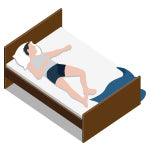
In the supine position, the pillow must support the natural curve of the neck without causing excessive flexion or extension. Medium height is usually the most balanced option, as long as it remains stable throughout the night.
Sleeping on your stomach

Sleeping on your stomach increases sustained cervical rotation. From a postural point of view, it is not the most favourable position for the neck, regardless of the pillow material.
Pillow height and mattress type
When talking about how to choose a pillow, its height is a very important factor. The correct pillow height depends on more variables than just sleeping position.

Body build, shoulder width and also the mattress you have at home all play a role. The type of mattress influences the compensation needed to maintain a neutral posture while sleeping. A firm mattress allows less shoulder sink when sleeping on your side, so it may require a higher pillow. A more adaptive mattress reduces that gap and may require less compensation.
The pillow and the mattress work together, so adapting the pillow height to the type of mattress you have in the bedroom helps ensure more optimal rest.
Memory foam, latex or fibre pillow: which material maintains posture best
Once the correct height has been defined, the material determines how well that height is maintained throughout the night.

Materials with a greater ability to retain their shape under pressure tend to maintain a more stable alignment during the night. In clinical research, ergonomic designs have shown improvements in sleep quality and a reduction in cervical discomfort compared with traditional pillows without a defined structure.
Traditional fibre pillows offer initial softness and lightness. However, as they lack a dense or contoured internal structure, they may gradually lose height under sustained pressure, especially after several hours in the same position. This loss of support alters cervical alignment even if the pillow still feels comfortable.
Latex pillows provide elasticity and immediate recovery, maintaining good structural stability when their configuration is appropriate.
Memory foam pillows adapt to the contour of the neck through pressure and temperature, distributing weight progressively. When the core has sufficient density, they keep their height more stable during the night, reducing forced position changes, which means better sleep quality.
Various studies indicate that support stability and the ability to maintain cervical alignment are key factors, and certain structural materials such as memory foam or latex make that stability easier to achieve compared with fillings without a defined structure.
Signs that your pillow is not working properly

There are common signs that your pillow is not working correctly.
Waking up with neck stiffness that improves during the day may indicate night-time misalignment. The need to reposition the pillow several times during the night may reflect loss of support. Shoulder pressure when sleeping on your side or occasional tingling in the arm may also be related to a sustained cervical tilt for hours. If you notice any of these, it may be time to replace your pillow.
Changing to a more suitable pillow that meets the factors explained above can help reduce neck pain and improve sleep. A proper pillow should not force constant adjustments or create accumulated tension, but should allow you to rest and wake up feeling refreshed in the morning.
The 60 seconds Vilma Sleep method : how to know which pillow you need

If you want to identify which type of pillow is most suitable for you without getting lost in theory, this is the practical summary we use as a technical reference:
1. Define your main sleeping position.
If you mainly sleep on your side, you need to fill the gap between shoulder and head. If you sleep on your back, the height must maintain the natural curve of the neck without bending it. If you sleep on your stomach, the height should be low to minimise cervical tension.
2. Check the real alignment.
Ask someone to observe your position while lying on your side. Your nose should be aligned with the centre of the sternum. If the head drops towards the mattress or lifts upwards, the height is not correct.
3. Evaluate stability after several hours.
A suitable pillow should not force you to reposition it constantly. If when you wake up it feels flattened or has lost shape, it is probably not maintaining the necessary structure.
4. Consider your mattress.
The firmer the mattress, the more compensation the pillow may need in the side position. The more adaptive the mattress, the less height is usually required.
5. Observe how you wake up.
The real test is not how you feel when going to bed, but how you wake up. If neck stiffness disappears during the day, the problem is usually night-time alignment.
If these five points fit, your pillow is doing its job. If not, it is probably time to review the height, the support or even replace it with a more suitable option.
Now that you know the technical criteria that determine a good choice, selecting a pillow stops being a matter of intuition and becomes a decision based on how your body sleeps.
At Vilma Sleep we design pillows with that real alignment in mind, focusing on stability over hours of use and the different needs of each sleeper.
The difference between a correct pillow and an unsuitable one is not noticed when you go to bed. It is noticed when you wake up. When the neck rests without tension, sleep is deeper and the day starts with a different level of energy.
